
Bangaldesh Survey Experiment: Mode Effects and Climate Adaptation R2
DATA Launches Round 2 of the World Bank Mode Effects and Climate Adaptation Survey
Following the successful completion of Rounds 0 (R0) and 1 (R1), DATA has now commenced Round 2 (R2) of the World Bank’s Mode Effects and Climate Adaptation Survey in Bangladesh.
This round represents a rapid follow-up conducted approximately one month after the previous survey rounds. Our field teams are revisiting the same panel households, interviewing two respondents from each household to better understand changes over time. Consistent with the experimental design, half of the sampled households are being interviewed by telephone, while the remaining half are being interviewed through face-to-face visits. This controlled approach enables researchers to rigorously examine how different survey modes influence data quality, response patterns, and measurement outcomes.
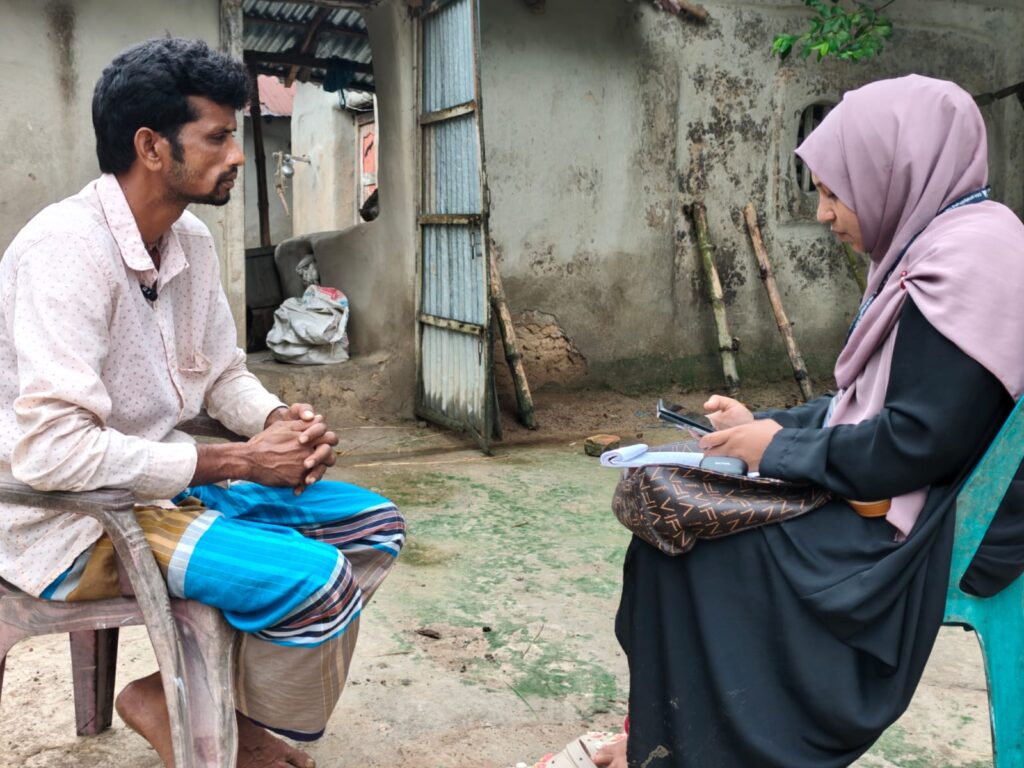
The study is being implemented simultaneously across Dhaka, Satkhira, Sirajganj, and Sunamganj, where field teams are working to complete approximately one Enumeration Area (EA) every two days. As with any panel survey, field operations remain flexible to accommodate respondent availability, weather conditions, and seasonal challenges, particularly during the ongoing monsoon period.
This survey forms part of a four-round longitudinal study (R0, R1, R2, and R3) contracted to DATA by the World Bank. Rounds 0 and 1 were completed only one week apart, while Round 2 continues to capture household experiences during the monsoon season. The upcoming Round 3 will provide valuable post-monsoon evidence, allowing researchers to better understand how households adapt to changing climatic conditions over time. By collecting data before, during, and after the monsoon, the study aims to generate important evidence on climate adaptation while also advancing methodological research on survey implementation.
A major component of the project’s success lies in the preparation of its field team. Recruitment began with more than 50 candidates, who underwent a structured assessment process before the final deployment of 38 Field Officers. While several experienced interviewers from previous rounds returned to the project, the majority of the team consists of newly recruited interviewers who successfully completed the selection process.
To prepare the team for this complex mixed-mode panel survey, DATA conducted an 11-day intensive training programme, combining classroom sessions with practical field exercises. Every interviewer was trained to conduct both face-to-face and telephone interviews, ensuring operational flexibility throughout the survey. The training covered questionnaire modules on household income, labour and employment, food security (FIES), mental health, and other socioeconomic indicators, alongside extensive sessions on respondent rapport, communication skills, ethical interviewing, respondent management, and proper microphone handling for high-quality audio recording. The team also participated in comprehensive pilot exercises conducted in Dhaka and Sunamganj, allowing interviewers to gain practical experience under real field conditions before nationwide deployment.
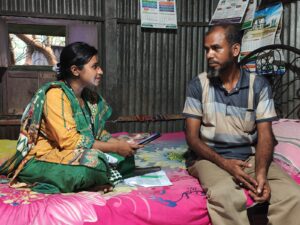
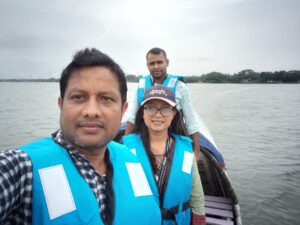
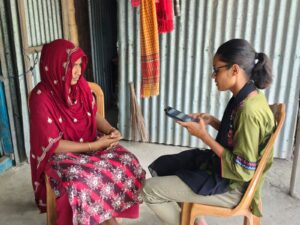
Across Round 2, DATA aims to complete interviews with more than 2,500 respondents, maintaining the high standards of quality control established during earlier rounds. Continuous respondent tracking, close field supervision, and real-time monitoring remain central to ensuring the successful implementation of this rapid panel survey.
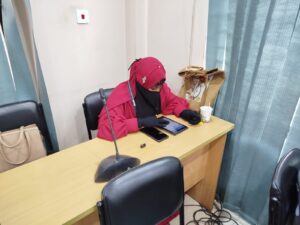

Beyond its immediate policy relevance, this study is expected to make a significant contribution to the growing literature on survey methodology. By comparing telephone and face-to-face interviews across multiple rounds with the same respondents, the research will generate valuable evidence on how survey mode influences data quality, respondent behaviour, and the measurement of key development indicators. The findings are expected to inform future household surveys and research methodologies used by governments, international development agencies, and researchers worldwide.
At DATA, we are proud to continue supporting the World Bank in delivering rigorous, high-quality evidence that advances both climate research and the science of household survey methods.
See less